A Welsh-flag-inspired cookie, courtesy of Rose. It was delicious.
Yesterday I mentioned how impressed I am with the Say Something In language courses. In my (yikes) decades of homeschooling, I’ve tried just about every language-learning program on the market at some point or another. A lot of them are good! Some are great, even. But nothing has ever made a new language click for me so rapidly the way SSi Welsh has.
Okay, I said for me. None of my kids have used it—yet. Huck is learning Spanish on Duolingo, and that’s one of a small handful of languages the SSi program offers. I, too, would like to move my Spanish past the tiny smattering of phrases I currently know, so my plan is to see if Huck is interested in working through Say Something in Spanish with me next year. But not yet! I want to complete the Welsh course first.
So much to say. First: why Welsh? The pat answer is that I enjoy trying small doses of new languages on Duolingo, and in the very first Welsh lesson, they teach you to say, “Good morning, dragon.” Needless to say, that had me at hello. But there’s a deeper answer—only it took a while for me to register it.
One of my earliest school memories is my kindergarten teacher, Mrs. Vinson, teaching our class the vowels: A, E, I, O, U, and sometimes Y—and sometimes W.
When I moved to a new school a year or two later, that lesson ran me into trouble. My new teacher was baffled by my inclusion of W in the list. I insisted, because Mrs. Vinson had said so! Mrs. Wiseman begged to differ, somewhat exasperatedly.
Several years later, I learned that W is a vowel in Welsh. With this knowledge, the puzzle shifted: why had a teacher in a tiny private school in south Georgia taught her kindergarteners a Welsh vowel? It must have been some kind of whimsical impulse, or maybe she (like me, actually) had Welsh ancestry—who knows?
Fast forward to the present. I’d been glued to my Duolingo Welsh and SSiW lessons for a couple of months before the Mrs. Vinson connection occurred to me. Actually, it was Scott who pinpointed the link. It’s lovely having someone who knows all your stories.
Well, here I am 114 days later, as captivated as I was the first time Duolingo nudged me to say Bore da, draig!Menyw dw i. It seems W-as-vowel has been waiting for me this whole time.
A few weeks into the Duolingo course, I had lots of questions about the grammar. Duolingo is great for helping you absorb a ton of vocabulary pretty quickly, but it seldom explains why things fit together the way they do. Some googling led me to Say Something In. It’s a really different kind of program—an emphasis on learning to hear and speak the language rather than to read it. (Which works especially well for Welsh, because Colloquial Welsh and Literary Welsh are quite different. Both Duolingo and SSiWelsh teach the former—the standardized written and spoken form of the language sometimes called Modern Standard Welsh.)
SSi’s learn-by-speaking approach is Pimsleurish, I suppose? But better, in my view (here I’m comparing Pimsleur German from years ago to SSi Welsh now). The lessons are all audio, and quite challenging, in a really exciting, lively way. I absolutely love it. It has become my primary means of learning, with Duolingo now serving as a daily supplement. I do like to see the words, so that’s what I like Duolingo for; I’m a visual learner and it really helps me remember a word if I know how to spell it. If I bump into a seeming discrepancy between the two programs, I reach for Gareth King’s Modern Welsh and he helps me understand what’s going on.
The Say Something In courses can be worked through at your own pace, but you have the option of a weekly rhythm with encouraging emails heralding each new lesson. There’s an enthusiastic community who hold lots of live conversation-practice sessions. I haven’t attended one of those yet, but I do plan to. I’m keeping up pretty well with the weekly lesson pace; each audio lesson is around half an hour, and you can do it all at once or in smaller chunks.
It’s sort of a playing-with-Legos approach to language (i.e. a very natural immersion approach), where you learn a few words and start building quite complex sentences with them right away. By the end of Lesson 1 I could state quite honestly: Dw i’n mynd i drio dysgu siarad Cymraeg—I’m going to try to learn to speak Welsh. Last night the lesson had me talking about how the old woman had better try to understand the young man, if she can remember how to say what she wants to say. And believe me, I had a little bit of trouble remembering how to say all of that—but I did it!
Besides Spanish, Dutch, and Welsh (with, by the way, options for lesssons in the dialects of North or South Wales), Say Something In offers Cornish and Manx. Manx! The historical language of the Isle of Mann. A Celtic language whose last native speaker died in 1974.
Which, come to think of it, would have been right around the time Mrs. Vinson was teaching me my vowels.
Heads up on an incredible deal! A whole year of Creativebug for $5. (Affiliate link.) The kids and I have taken sooo many of their art & stitching classes over the years. I’ve taken all of Lisa Congdon’s drawing classes and Rebecca Ringquist’s embroidery classes, to name a few—especially fun since I’ve become friends with both Lisa and Rebecca since moving to Portland!
I’ve posted many times about what an invaluable resource Creativebug is for homeschoolers and anyone else looking for affordable, high-quality art classes. This post recaps a few of my favorites.
This photo (Rilla, circa 2008) has summed up my mood all week. I’m just…beat. Among other things, I’ve been wrestling with this blog-post-by-email transition and—long story short—you may or may not get this post in your in-box. Who can say, really?
I had a ton of things saved up to talk about here, but instead I think I’ll just post pics of the July accomplishment I’m most excited about: I made this reversible drawstring bag! The pattern (“Modern Japanese Rice Pouch” by the wonderful KZ Stevens) says “Difficulty level: beginner” and yes! This is accurate! If I can pull it off, anyone can.
It only took me 16 months—or 10 hours, depending how you count. I assembled the patchwork pieces of the outer panel in early March, 2020, and then FOR SOME MYSTERIOUS REASON I got distracted and set the project aside. I picked it up again about a year later and embroidered a few embellishments, and then once again I got sidetracked. But about a week ago I felt a powerful need to finish something—preferably something I could hold in my hands. I remembered the drawstring bag and dug it out of my project pile.
To my surprise and delight, I was able to assemble the bag in a few hours’ time—and that included all the time I spent watching Youtube videos to troubleshoot Beanie’s sewing machine. (My own machine, a perfectly wonderful cheap little Brother that I bought in 1995 with my first-ever publishing check, decided a 25-year romance was long enough. Farewell, old friend. It’s you, it’s you must go and I must bide.)
So anyway, now I’m obsessed and want to sew ALL THE BAGS. I’m thinking this square-bottomed drawstring pouch would be a perfect way to use some of the eleventy-million pieces of embroidery I’ve amassed these past few years. I might even see if I can add a pocket or two.
But first I think I’ll work through this Seam Finishing 101 class at Creativebug. (That’s an affiliate link because I remain as wildly enthusiastic about Creativebug as ever. I’ve taken soooo many drawing, painting, and stitching classes there. The kids have done a bunch, too. In my opinion it remains the best bang-for-your-buck subscription for a crafting family. They have a deal right now where you can buy an annual pass for $50 and get $50 to spend at Joann’s. Or you can do a free trial and sample a bunch of different classes.) Whenever I sew something that more or less works out, I feel sort of dazed and lucky, as if success were entirely a matter of chance instead of, you know, skill. I could stand to make a little headway in the skill department.
Another sewing class that caught my eye is this one on the Physics of Sewing. Color me intrigued!
Meanwhile, I’m rummaging through the archeological dig I call a garage, unearthing fabric purchased by earlier iterations of myself. Thanks for the stash, Lissa of the 1900s.
Two months free, then 50% off for life! Our Creativebug membership continues to be a mainstay of our homeschooling life. I get positively giddy when I scroll through the courses. I bet I’ve taken forty courses by now—drawing, painting, embroidery, sewing! And that’s just me—the kids use it too.
Nerviest Girl readers—check out this Creativebug class on how to Make a Parachuting Ostrich! Go Jezebel!
(Affiliate link but I’m a longtime paying customer too.)
Fun fun! I’m excited to share that The Nerviest Girl in the World is the Random House Teachers & Librarians Book of the Month! I wrote a guest post for the RHTL blog crammed with resources and activities for using Nerviest Girl as a springboard to fun learning adventures. Enjoy!
This Youtube video walks through a few more problems, including some with three-digit numbers and carrying over. The method works with larger numbers but gets a bit unwieldy beyond three or four digits.
Ahhh…a fun, full, hard, harrowing week is behind me. Not only did I have the excitement of the book launch, I also took a (truly excellent) four-day Author Visits workshop by Kate Messner & Julie Hedlund, and I had a writing deadline for Brave Writer. The workshop was terrific, with lots of practical strategies for reimagining our in-person school visits to fit this year’s all-remote reality. (Even schools that are reopening classrooms aren’t going to be bringing in authors and illustrators to meet the kids face-to-face this year.)
This week things are settling back to routine—this still-new routine in which the bulk of my work time falls between 6am and noon, and we homeschool in the afternoons. With only two kids left to homeschool, three hours is plenty of time for any high-tide learning we have planned. Then I log into Zoom for my afternoon coworking session (3-5pm PDT; see my Patreon if you’re interested in joining) and I usually keep going afterward until I run out of steam—usually around 6. A full day, to be sure! But I like it that way.
Today’s Tuesday, which means Poetry Teatime! Maybe I’ll see if Rilla wants to make some oat bars for our treat. We’ll also do some conversing in German (we’re using Talkbox.mom this year and having a lot of fun with it—I can share a coupon code if you’re interested). Rilla and I are cooking up some kind of longterm study project on frogs, one of her special interests.
Something I haven’t had enough time for this past month is reading! Hoping to turn that around this week. My Kindle is going to explode if I don’t give it some attention. I want to ask what you’re reading right now but that’s a dangerous question, when you already have a TBR list that stretches to the moon.
Exciting news: something very cool is happening next week.
When Julie Bogart of Brave Writer heard I was planning to do a Prairie Thief readaloud for kids stuck at home, she asked if I’d like to be part of an event she was cooking up with Susan Wise Bauer: a free online conference for homeschoolers and suddenly-home-from-school families. I’ll let Julie explain:
Announcing: HOMEBOUND
March 23-27
A FREE Online Conference for homeschoolers and “suddenly-at-home” schoolers!
I called Susan Wise Bauer and we put our heads together. We realize many of you won’t get to go to a convention this year, and many others of you are brand new to educating at home (while also working from home!). Susan and I know something about both of those. We reasoned: why not do a free conference online? Everyone will be available! No soccer practice conflicts!So… we invited several friends to join us and we’ve got an entire week of events online planned for you AND your kids!
The lineup:
• Poet Amy Ludwig Vanderwater doing daily workshops for kids keeping writers’ notebooks
• Jim Weiss telling stories!
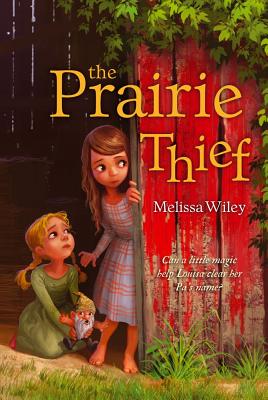
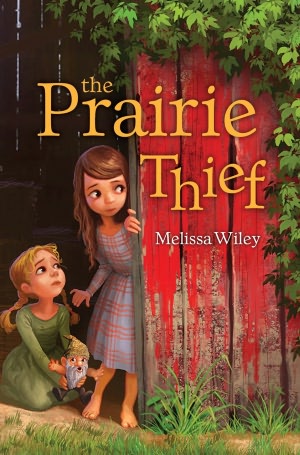
• Melissa Wiley [hey, that’s me!] reading her novel The Prairie Thief aloud
• Josh MacNeill (Neurologic by Lakeside) helping us cope with trauma and boredom
• Charnaie Gordon (Here Wee Read) teaching about empathy through diverse picture books
• Kate Snow (Kate’s Homeschool Math) helping your kids practice and master math facts
• Rita Cevasco (Rooted in Language) helping us know how to grow readers at home, esp those w learning challenges
• Ainsley Arment (Wild & Free) will share about reclaiming a child’s wonder
— SUSAN will share her convention lectures: Homeschooling a Real Child, and Why History Matters. I’ll (Julie) give my convention sessions: Home, not School and Word Play: Creating a reading and writing rich lifestyle. ALL details are here: Homebound Conference.
It’s free, but you must register for each session. We need a headcount. All webinars will be recorded for free replay.We are so excited to do this with you!!!
I just wrote an epic Twitter thread with advice for parents who have suddenly found themselves thrust into homeschooling situations due to COVID-19. I promised to compile it here for easy reference, so here it is!
Suddenly & temporarily homeschooling parents: I’m a work-at-home mom of six who has been homeschooling for over 20 years & I’m here to help if you have questions! I call my family’s learning style “Tidal Homeschooling” in recognition of natural ebbs & flows in life & learning. 1/
I’m a work-at-home mom of six who has been homeschooling for over 20 years and I’m here to help if you have questions! I call my family’s learning style “Tidal Homeschooling” in recognition of natural ebbs and flows in life and learning.
One of my kids is high risk for respiratory issues, so our family began social distancing about a week before it went national. This is definitely a low tide season in our homeschooling life! Lots of art projects and games. Gardening. Poetry. Baking. Music. A bit of mellow math.
As you can see, I’m bananas about middle-grade fiction. That’s what I write! Starting next Monday I’ll be reading my novel The Prairie Thief out loud every day at 4pm EDT/1pm PDT. Details coming soon—you can sign up for my newsletter and get more book recommendations. Also this blog! The archives are crammed with book recs for all ages and other fun learning resources.
Challenging but full of delight
I’m seeing a lot of tweets right now about the struggles suddenly-homeschooling families are experiencing and I get it. I’ve homeschooled through book deadlines and killer workloads and breast cancer and kids in the hospital and you name it. What I’ve learned: relationship is the most important thing.
Carve out some work time for yourself & a family quiet reading time if that fits your schedule. Dig out old toys the kids outgrew—nostalgia is a major entertainment aide in times like this. Play board games. Make slime. Find art & craft supplies from projects you meant to finish—let the kids have at ’em. That bin of quilting supplies I’ve been hoarding? Yeah, turns out I’m never going to be a quilter. That fabric is fair game for cooped-up kids now.
We’re getting ready to launch a massive D&D campaign—I’m DMing. And the kid who likes gardening is helping me repot plants. The kid who likes games is roping siblings in to play. Lots of Wii action too.
Don’t try to make it school at home
If they have packets of schoolwork they have to do, don’t let that be the thing that pits you against each other. Working one on one often takes less time than group learning. (Group learning has its perks too. We’re sorely missing our homeschool co-op these days.) Get gummy bears or pretzels for lesson time because chewing helps people concentrate. No, really, it’s a thing. Keep lesson time short for now, and if they’re writing, you write too! Good time to start your plague journal.
Use up the paints and good paper you’ve been hoarding. Or use printer paper and a ballpoint. Get messy. Do round robin drawings where you draw a bit, your kid adds to it, you add more, you all laugh hysterically & make sweet memories. Get out the family photos. Make videos!
Watch science videos. Watch Bill Nye! Find Cyberchase on PBS Kids! (More magical nostalgia for my gang.) SING, sing as much as you can. Youtube search any song + karaoke—now’s the time for your family to find that perfect song they can belt out. It’s a life skill!
But what about their homework?
If they have math to do: here’s the thing. There are loads of ways to learn math. If a concept isn’t making sense, ask for help here or on Twitter. You’ll be bombarded with creative ideas.
Don’t try to make it “school at home.” The dynamic is SO different. You can do math in bed & foreign language while loading the dishwasher. Make beanbags (remember that fabric stash? If you don’t have thread just staple them) & toss them while chanting times tables. The beanbags won’t last but the memories will.
I wish I had time to ____(it’s time to fill in that blank!)
Find out what each kid has been yearning to learn. Ukulele? Coding? Cake decorating? Let that happen now. Ransack the cabinets. Try Creativebug or Skillshare for classes. Millions of tutorials on Youtube. Let them go deep if they want.
Or let them chill out if that’s what they need. Down time is a precious commodity and lots of kids don’t get much of it these days. Read comics. Crumple aluminum foil & have a catch in the living room. Tape toilet paper rolls (if you scored any) to the wall to make marble tunnels. (I would say fill a pan with rice and hide “artifacts” for littles to find, but maybe you should save your rice for eating.)
Dive deep
All I want to do right now is embroider—I have a couple of TOTALLY ABSORBING stitching projects—but I have a heavy workload at the moment so I have to squeeze it in. Find out what your kid’s (and YOUR) embroidery equivalent is and let now be the time.
A school day includes making lunches and walk/drive/bus time and moving between classes and tests and homework (one of my six goes to public school, I get it)—remember, all those minutes are free now. So you don’t have to expect homeschooling to take as many hours as school-school. In our “high tide” times (structured learning), we knock out our work between nine and noon. Afternoons are free time for my kids and work for me. I have college grads—it worked fine!
My one school kid is in tenth grade. His teacher sent me a packet of schoolwork but said the only thing to make sure he keeps up with is the gratitude journal. Three things a day. I loved that idea and made them for my younger kids too.
This thread got long! I have a bajillion ideas but they all come back to leaning into the together time as much as possible, diving deep into personal interests, keeping a daily rhythm that suits your family (including your own work time), and lots of readalouds for all ages.
All roads lead to learning
Another thing we do! (See? I can’t stop.) My family uses The West Wing as a spine for 10th grade civics. It’s a springboard for all sorts of research topics. You can do the same thing with any show.
Any kid interest can be that springboard. Homeschoolers call it “rabbit trailing.” I’ve written a ton about it here at Bonny Glen over the years.
Schoolhouse Rock. Downton Abbey. The Importance of Being Earnest. Horrible Histories. Fun in themselves, and also: springboards!
Mad Libs. Hot Wheels on the stairs. Jim Weiss stories. Baby books! Seriously. My 11yo son happened upon all our old Sandra Boynton & Byron Barton board books the other day & hauled them all upstairs for a giggly rereading session.
Here to help
Hit me up for ideas anytime. I know it’s challenging to do kids and work in the same space & same time frame! But it can be joyful, I promise. Forget about subject categories and just explore stuff. Let the teens sleep late. Let the tweens learn fancy hairstyles on Youtube.
Make a family Minecraft kingdom. We had one and my kids kept filling my house with pigs, and one of the tweens had a long-running Monty Pythonesque retort competition with my husband via the wooden signs.
My parenting life got hit with a 9-month children’s hospital stay when my oldest was 2yo (leukemia, she’s 24 and healthy now) so I had to learn fast and young how to make life fun for my kid and me in social distancing situations.
Holler if I can help with anything. As the mom of a medically complicated kid (and a person with a dodgy health history of my own), I sincerely thank you for doing your part to flatten the curve.





 SUSAN will share her convention lectures: Homeschooling a Real Child, and Why History Matters. I’ll (Julie) give my convention sessions: Home, not School and Word Play: Creating a reading and writing rich lifestyle. ALL details are here: Homebound Conference.