Breathtaking
July 17, 2011 @ 7:48 am | Filed under: Nature Study, Science
Comments are off
Comments are off
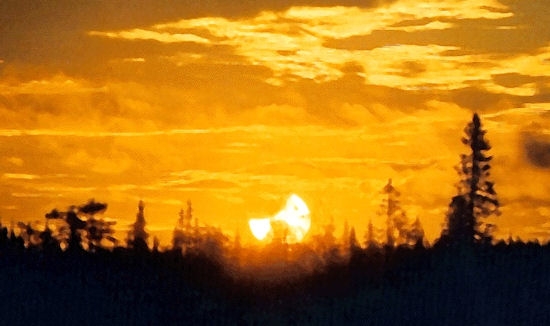
A Rare Eclipse of the Midnight Sun – NASA Science.
(Am I the only person for whom any mention of the midnight sun immediately and powerfully evokes Papa’s Wife? Man, how I loved that book.)
 A booklist I’m putting together for later use:
Joy Hakim’s The Story of Science trilogy. Jeanne Faulconer’s review shifted these from “I keep meaning to take a look at those” to “that’s what I’ll use my gift certificate on.”
Animals Charles Darwin Saw by Sandra Markle, illustrated by Zina Saunders. A beautiful and informative picture book about Darwin’s travels, observations, thought processes, conclusions.
Charles and Emma: The Darwins’ Leap of Faith by Deborah Heiligman. Jane & I both enjoyed this thoughtful biography last year; I’d like for Rose and Beanie to read it too.
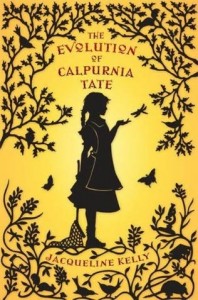
The Evolution of Calpurnia Tate by Jacqueline Kelly. This frank and funny middle-grade novel set in 1899 was one of my favorite reads of 2010, and I wasn’t a bit surprised when it took the Newbery Honor that year. Three or four of us have read it already, but I don’t think Beanie has yet, and its tomboy heroine is very much up her alley. (An aside: this book would make an interesting pairing with New Dawn on Rocky Ridge, another turn-of-the-century tale.)
Archimedes and the Door to Science by Jeanne Bendick; also her Galen and Galileo books. Longtime Jane favorites, as is The Mystery of the Periodic Table, which seems to have been co-authored by Jeanne Bendick and Benjamin Wiker.
 Gregor Mendel: The Friar Who Grew Peas by Cheryl Bardoe, illustrated by Jos A. Smith. My friend Eileen recommended this picture book a while back.
Some of No Starch Press’s Manga Guides: Electricity, Physics, Relativity, etc. And I’d like a look at Larry Gonick’s Cartoon Guide to Physics.
The Beak of the Finch by Jonathan Weiner. Jane loved this book; I’m eager for a crack at it myself. An account of Peter and Rosemary Grant’s twenty years observing the finches of Daphne Major in the Galapagos.
The Voyage of the Beagle: Darwin’s account of his journey.
If you were along for my Fruitless Fall bee-frenzy two years ago, you may recall that the author, Rowan Jacobsen, was an MFA-program classmate of mine at UNC-Greensboro. The other day I remembered that I hadn’t checked in a while to see what new and interesting books he might have out. WELL. I read the sample chapters of his American Terroir, The Living Shore, and Shadows on the Gulf: A Journey through Our Last Great Wetland, and, well, now all three books are on their way. Scott insisted, and Jane—who loved his book on chocolate even more than the bee book, which is saying something—is ecstatic.
 The Librarian Who Measured the Earth by Kathryn Lasky, illustrated by Kevin Hawkes. Picture book I’ve heard good things about but haven’t read yet.
The Tree of Life: Charles Darwin, a perfectly gorgeous book by the great Peter Sis.
I’ll be adding to this list over time. For example, I know we have good biographies of Marie Curie and Pasteur that Jane has read more than once, but not the other girls. Jacqueline Houtman’s The Reinvention of Edison Thomas might fit the bill; I’ve wanted to read that one since the author’s interesting presentation at Kidlitcon last fall. I love her description of ‘sciency fiction’ as the genre she works in:
“In sciency fiction, science (actual, accurate, non-speculative science) is integral to the plot and/or thematic content of the novel. The characters and events may be fictional, but the science is not. Sciency fiction is not science fiction.”
(Mind you, I’m a huge science fiction fan, as well. Jane says she can’t imagine growing up without Ender’s Game. [Mature language warning for that one, okay?] But in recent years I have become more and more hooked on what Jacqueline calls sciency fiction, as well as science-themed nonfiction.)
Feel free to chime in with sciency fiction and nonfiction your kids have enjoyed. I’m particularly interested in picture books. Snowflake Bentley, perhaps?
On Saturday I took the three oldest girls to the San Diego Science Expo at Petco Park. Throngs of people, dozens of nifty hands-on exhibits and activities, a mental overload of Very Cool Stuff. My favorite part was when we’d made it about halfway around the circuit inside the stadium and came to a large ring of booths in a park just outside, and Beanie and Jane were practically cheering with enthusiasm: Look at the guy making smoke rings with that gizmo! Look at the motorized robot-car built out of Legos!
And Rose and I were like: OOH, LOOK AT THAT BUILDING OVER THERE THAT SAYS CANDY FACTORY.
Hey, candymaking is a science, right?
Sadly, the Showley Bros. Candy Factory is no longer operational, and the plans for our next field trip died a-borning.
I took my camera to the Expo but neglected to take it out of my bag. I did snap one quick pic of the smoke-rings guy on my cellphone (which happened to be in my hand because I was googling the Showley Bros. Candy Factory).
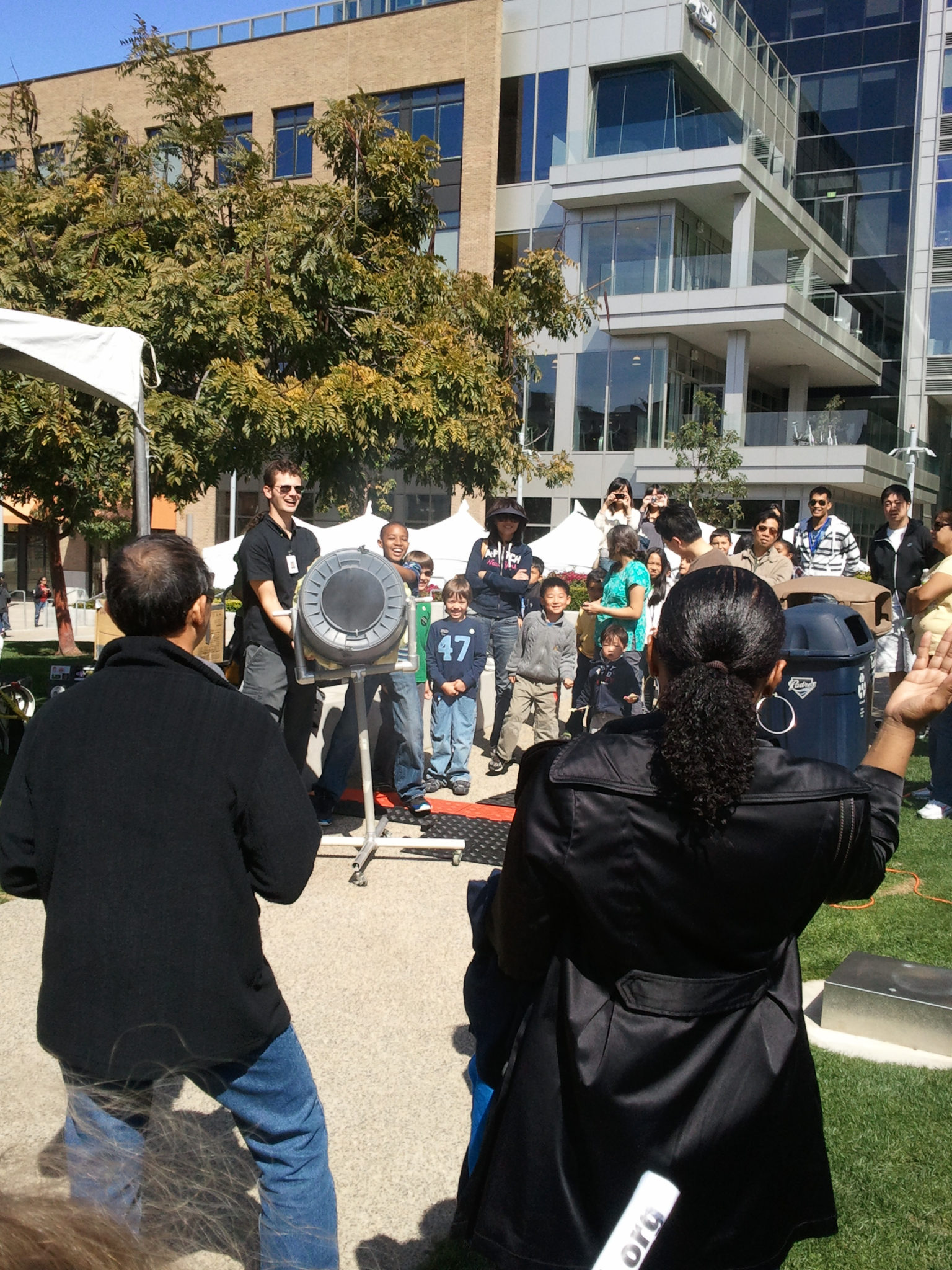
The smoke rings didn’t show up in the photo, but I do believe that’s a bit of Beanie’s hair in the lower left.
Comments are off
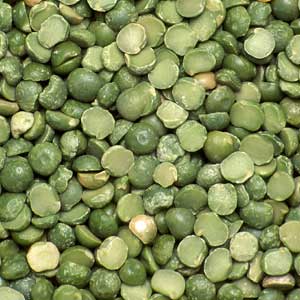 Jane takes a chemistry lab class once a week and last week she casually informed me that they had extracted DNA from split peas in class.
Me: Bwah?
Jane: Yep, with a blender.
Me: …
She told me how it worked and it sounded extremely cool and I asked for the directions. She found the experiment written up here, at the University of Utah’s Genetic Science Learning Center (but warned me, as I shall now warn you, that the background color is an assault on the eyes).
What you need:
Salt
Water
A small glass
A long toothpick or wooden stick
Detergent
A DNA source (split peas)
Contact lens solution
A blender
A measuring container
Rubbing alcohol
A test tube (optional)
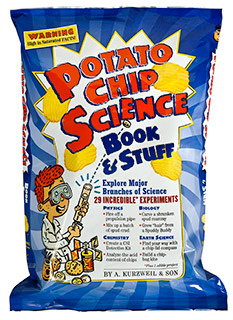 Have any of you tried out the Potato Chip Science kit? It was one of the coolest things I saw at ALA last weekend and I’ve got one on the way…looks like something my gang will enjoy the heck out of. Would love to hear about your experiences with it. I’ll report back after we’ve had a go ourselves.
We started our day giggling over this science humor:
Via BoingBoing, conveyor of many delights.
The everyday magic of surface tension: “the quality of a liquid that causes the surface layer of that liquid to behave like an elastic sheet.”
HT to my hubby, as usual. He always finds the best stuff.